First Snow in Littleton: Why the First Storm Catches Drivers Off Guard and What It Does to Necks and Backs
The first snow in Littleton is always a little dramatic.
The forecast says “possible accumulation.” People look out the window, see mostly wet pavement, and think they have plenty of time. Then the temperature drops, the roads get slick, brake lights stack up, and the normal commute starts moving like everyone just learned how to drive.
It is not because Littleton drivers are careless. It is because the first storm changes a lot at once.
Road conditions change. Visibility changes. Traffic patterns change. Drivers who have spent months on dry pavement have to recalibrate braking, turning, following distance, and timing. Some vehicles are ready for winter. Some are not. And most people are still trying to get home on the same schedule they had yesterday.
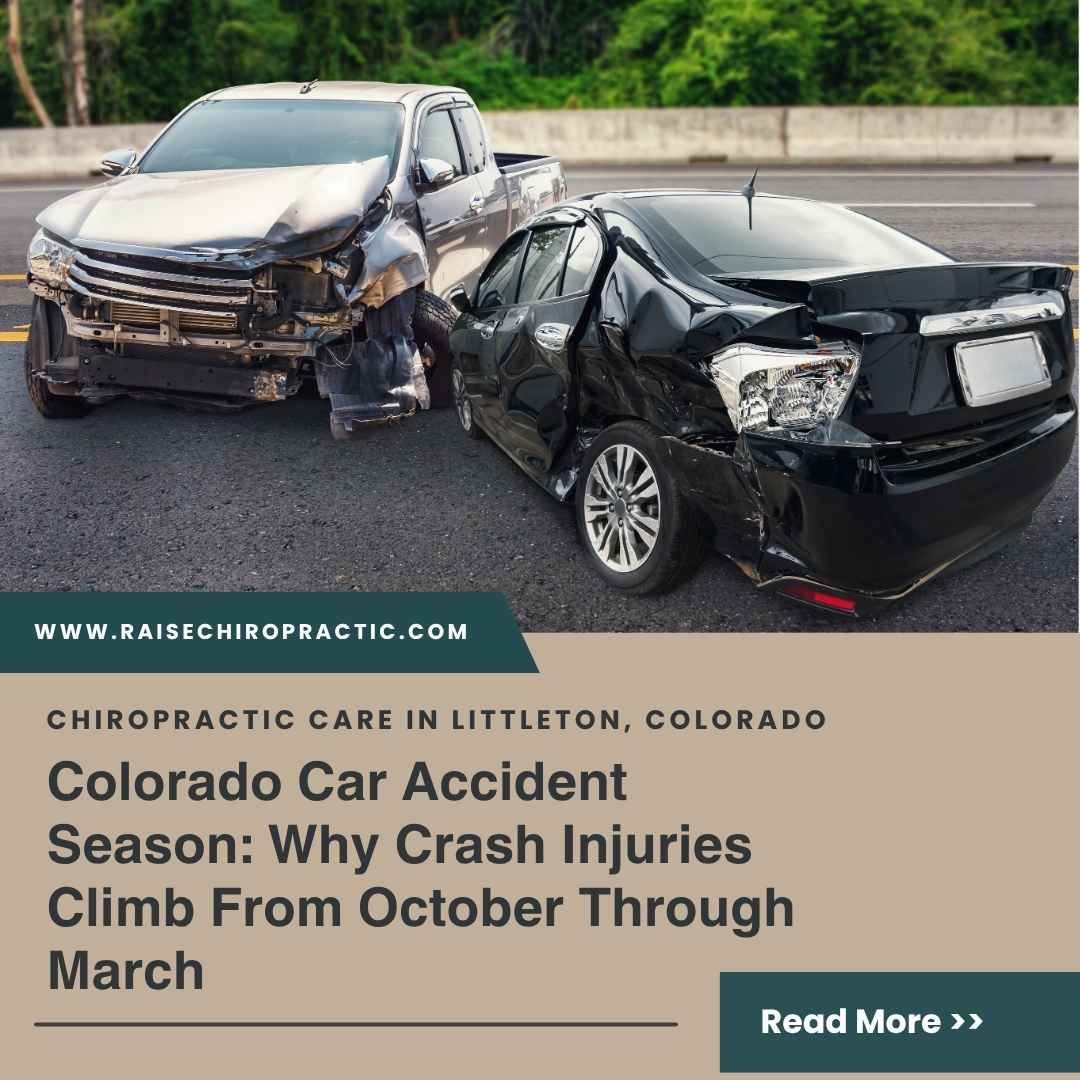
That is why a first snow car accident in Littleton is such a common fall-and-winter story.
At Raise Chiropractic, we often hear the same thing afterward: “It did not seem like a major crash.” Maybe it was a low-speed rear-end collision at an intersection. Maybe someone slid in a parking lot. Maybe a sudden stop on Santa Fe, C-470, or a neighborhood street created just enough force to leave the neck, shoulders, or low back feeling wrong the next day.
The car might be drivable. Your body may still need attention.
Why the First Storm Catches People Off Guard
The first significant snow does not need to be a blizzard to create problems.
In fact, the early storms can be especially tricky because people are still in fall mode. Tires may not be checked. Windshield wiper fluid may be low. The snow brush is probably still in the garage. And drivers have not yet adjusted their habits for darker mornings, wet roads, and sudden temperature swings.
The first few snowfalls also tend to happen when schedules are already full. Parents are getting kids to school. Professionals are trying to make meetings. Holiday events are starting to fill the calendar. Nobody wants to leave 20 minutes early because of “a little weather.”
But a little weather can change traction quickly.
A road that looked merely wet can become slick when temperatures fall. Bridges, ramps, shaded areas, side streets, and intersections can feel different from one block to the next. Local streets may not be treated or cleared on the same schedule as state highways, which can catch people off guard after they exit the main road.
The result is often not a high-speed highway collision. It is the sudden stop. The vehicle that slides a few extra feet. The driver who brakes too late. The low-speed impact that leaves everyone saying, “That was not that bad,” until the soreness sets in later.
Four-Wheel Drive Does Not Change the Laws of Physics
Colorado drivers know the feeling: the first flakes fall, and somebody decides their SUV is now invincible.
All-wheel drive and four-wheel drive can be helpful in certain conditions, but they do not make ice disappear. They do not give a vehicle unlimited stopping power. They do not make a distracted or rushed driver react faster.
That matters because first-snow crashes often happen when people are driving for yesterday’s conditions instead of today’s.
A few common first-snow mistakes include:
- Following too closely because traffic was moving normally five minutes ago
- Braking, turning, and accelerating too aggressively at the same time
- Driving too fast for visibility or road conditions
- Assuming main roads and side streets will have the same traction
- Leaving the house at the usual time and feeling pressured to “make up” for delays
- Relying on vehicle technology instead of slowing down and creating space
- Driving with snow or ice still blocking visibility
The solution is not complicated, but it does require patience: slow down, give yourself more space, and allow extra time. Not exciting advice. Very useful advice.
What a “Minor” Snow Crash Can Do to Your Neck and Back
Here is the part people tend to underestimate.
A collision does not need to be dramatic to create discomfort. When your vehicle stops suddenly, gets bumped from behind, or slides into another car, your body may tense up fast. Your shoulders rise. Your hands tighten around the steering wheel. Your head and neck move quickly. Your low back braces against the seat.
That combination can leave muscles, joints, and soft tissues irritated—even when there is little visible vehicle damage.
You may feel fine enough to exchange information and drive home. Then the next morning, your neck does not want to turn. Your upper back feels tight. Your jaw aches from clenching. Your low back hurts when you bend to put on shoes. A headache creeps in by midafternoon.
That delay is one reason people dismiss symptoms after a first snow car accident in Littleton. They assume the discomfort must be from sleeping wrong, shoveling, working at a laptop, or general winter stiffness.
Sometimes it is. But if the pain began after a collision or keeps getting worse after one, the crash deserves to be part of the conversation.
Symptoms That Are Worth Taking Seriously
You do not need to panic over every ache. But you should pay attention to symptoms that are new, persistent, or affecting normal life.
After a snow-related crash, watch for:
- Neck stiffness or pain when checking blind spots
- Headaches that began after the collision
- Shoulder tension, upper-back tightness, or pain between the shoulder blades
- Low-back pain, especially when sitting, getting out of the car, or bending
- Jaw pain, clenching, clicking, or facial tightness
- Dizziness, feeling foggy, nausea, or sensitivity to light or noise
- Tingling, numbness, weakness, or pain moving into an arm or leg
- Rib soreness or discomfort when taking a deep breath
- Trouble sleeping because you cannot get comfortable
- Symptoms that become more noticeable over the next day or two
Your body is not being dramatic. It is giving you information.
If symptoms are sticking around, interfering with work or family life, or making you change how you move, get evaluated. The sooner you understand what is going on, the easier it is to make a reasonable plan.
What to Do After a First-Snow Collision
First, take care of safety at the scene. If there are injuries, significant damage, or an unsafe roadway situation, call for help and follow the appropriate steps.
Afterward, give yourself permission to pay attention to how you feel. You do not have to decide in the first hour whether the crash was “serious enough” to matter.
A simple post-crash checklist can help:
- Write down the details of the collision while they are fresh.
- Note where you feel discomfort and when it began.
- Take photos of visible bruising or swelling, if applicable.
- Follow medical advice from any emergency or urgent-care evaluation.
- Avoid “testing” a sore neck or back by pushing through workouts, heavy lifting, or a long day of chores.
- Keep records of appointments, recommendations, and changes in symptoms.
If an insurance claim is involved, accurate documentation can be important. That is not about making the crash bigger than it was. It is about creating a clear record of what happened and how your symptoms affected daily life.
When to Get Urgent Medical Care
Chiropractic care is not the first stop for every crash injury.
Seek emergency care right away for symptoms such as loss of consciousness, worsening headache, repeated vomiting, confusion, seizures, new weakness or numbness, severe neck or back pain, chest pain, trouble breathing, or significant pain after a high-impact collision.
If you have been evaluated and cleared of urgent concerns but still feel stiff, sore, limited, or simply not like yourself, that is where a more complete musculoskeletal assessment can help.
How Raise Chiropractic Approaches Snow-Crash Injuries
At Raise Chiropractic, we do not rush people through a generic adjustment after a collision.
We start with a real conversation. How did the crash happen? Were you hit from behind? Did your car slide? Did you brace hard? Did symptoms show up immediately or the next morning? What movements are difficult now that were easy before?
Then we look at how you move.
Is your neck rotation limited? Are you guarding a shoulder? Is low-back pain changing the way you sit, walk, or sleep? Are there signs that you need imaging, medical evaluation, or another specialist before chiropractic care moves forward?
When chiropractic care is appropriate, a personalized plan may include chiropractic treatment, soft-tissue work, and movement-based recommendations designed to help reduce pain and improve movement. We may also help coordinate a referral when another type of care is the better fit.
Our appointments typically allow 30 to 45 minutes because an auto injury deserves more than a quick “Where does it hurt?” and a one-size-fits-all plan. You should leave with a clearer understanding of what may be going on and what your next step should be.
The Best First-Snow Plan Is Boring—and It Works
Before the next Littleton storm, check conditions. Clear your windshield fully. Give yourself extra time. Make sure your tires, brakes, lights, wipers, and winter supplies are ready. Slow down before the road forces you to.
And if you are involved in a collision, do not let the lack of dramatic car damage convince you that your body will automatically be fine.
The first snow catches people off guard because it asks them to change habits quickly. A thoughtful recovery plan can help your body do the same.
If you are dealing with neck, back, or shoulder pain after a first-snow crash in Littleton, schedule a personal injury evaluation with
Raise Chiropractic for clear answers and a no-pressure plan forward.
Move Better. Live Pain-Free.