
Golfer's Elbow Treatment in Littleton, CO
Your Inner Elbow Calms Down With Rest, Then Flares the Moment You Grip Again.
Golfer's elbow can make pulling, carrying, swinging, and even turning a doorknob feel unexpectedly difficult. Raise Chiropractic provides personalized golfer's elbow treatment in Littleton, CO, focused on identifying what keeps overloading the inner elbow and rebuilding the capacity your arm needs.
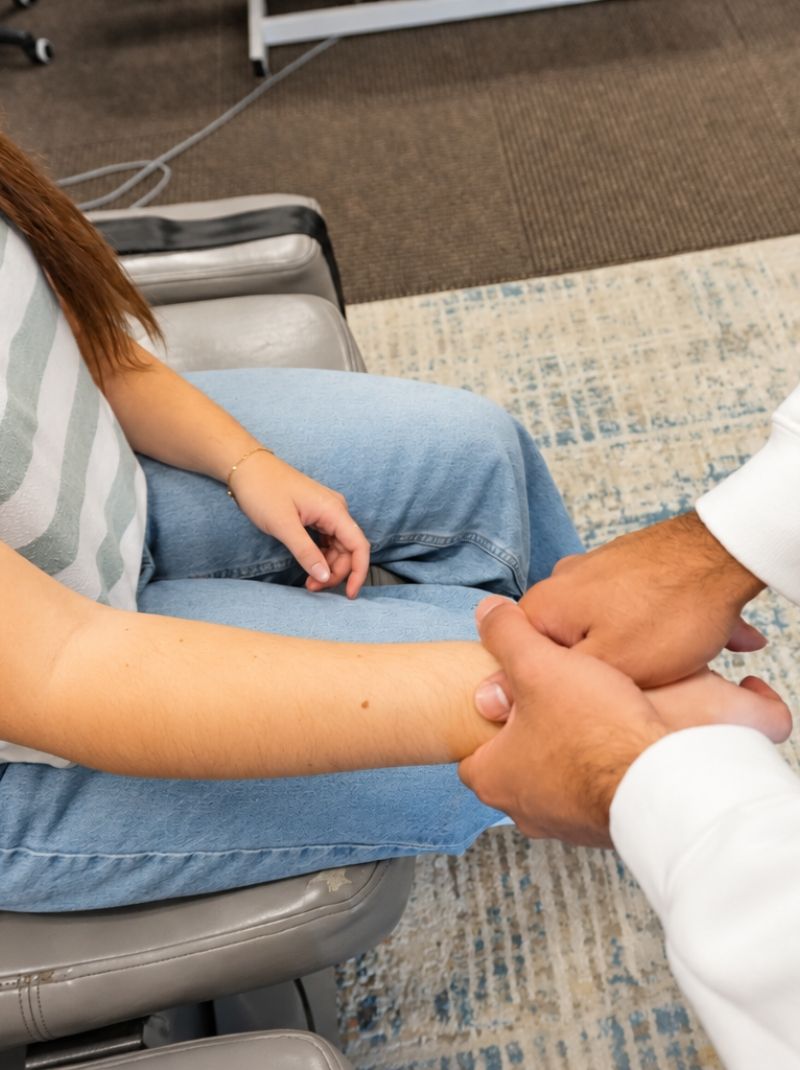
What Is Golfer's Elbow?
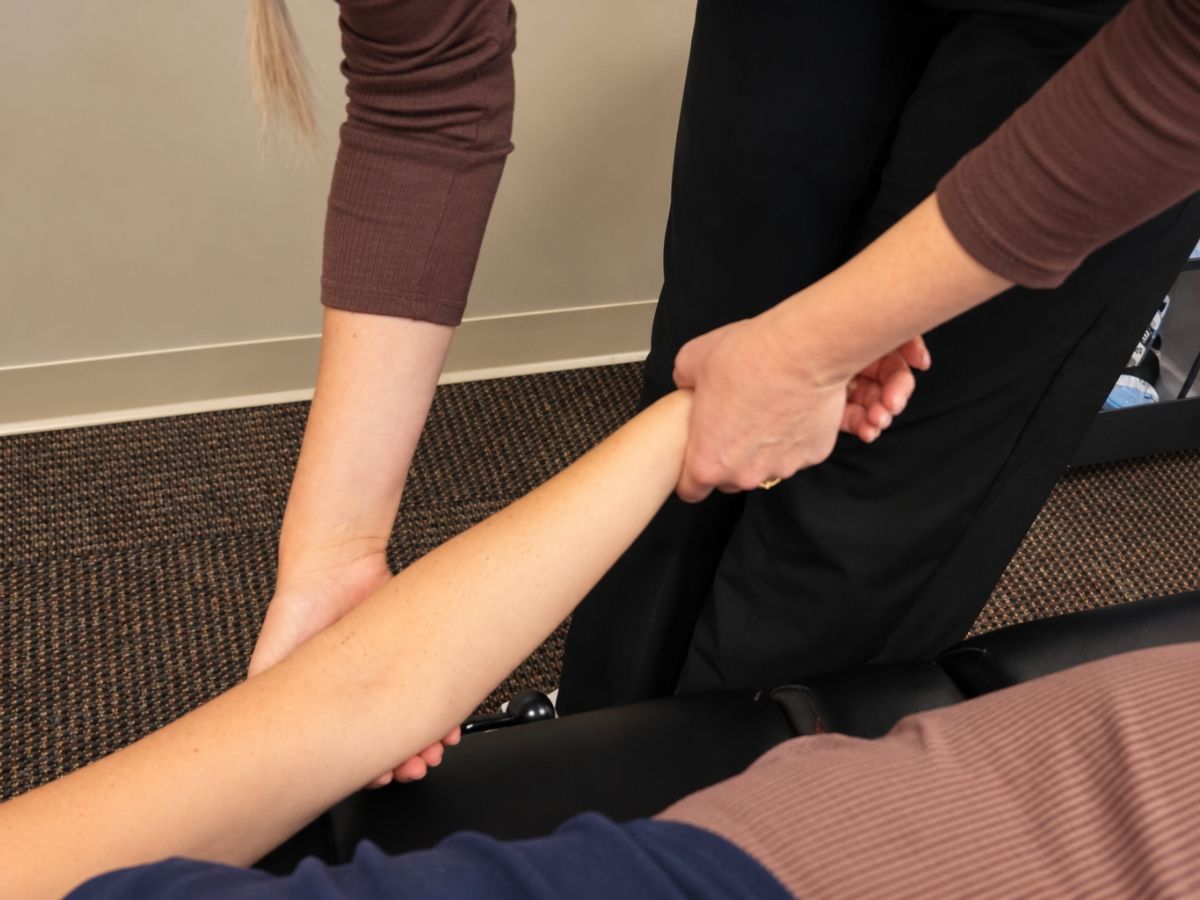
Golfer's elbow is irritation where the wrist-flexor and gripping tendons attach near the inside of the elbow. Despite the name, it is not limited to golfers. It can develop from lifting, pulling, throwing, tool use, strength training, or any repeated task that asks the inner forearm to manage more load than it can currently tolerate.
The painful attachment is only part of the picture. Wrist strength, shoulder control, neck mobility, work setup, sports mechanics, and how quickly your activity increased may all influence the strain reaching the elbow. A focused evaluation helps determine what needs treatment and what needs greater capacity.
Common Symptoms of Golfer's Elbow
Pain or tenderness along the inside of the elbow
A weaker or painful grip
Pain while carrying a bag or lifting palm-up
Discomfort with tools, throwing, or repetitive hand use
Pain during golf, climbing, throwing, or strength training
Forearm tightness or tenderness near the elbow
Common Causes of Golfer's Elbow
Golfer's elbow usually develops from accumulated demand rather than one dramatic moment. Your work, training volume, grip mechanics, recovery, mobility, and strength help clarify why the tendon remains irritated.
Repetitive Gripping and Wrist Flexion
Repeated gripping, wrist flexion, or forearm rotation can overload the tendons that attach near the inside of the elbow.
A Sudden Increase in Activity
Starting a new job, returning to a sport, increasing weight, or adding more repetitions can exceed what the tendon is prepared to handle.
Reduced Forearm Capacity
When the wrist and forearm fatigue quickly, ordinary lifting and repetitive tasks can continue placing excessive demand on the painful attachment.
Shoulder or Neck Mechanics
Limited shoulder control, restricted neck movement, or nerve irritation may change how force travels through the arm and should be evaluated.
Tool, Throwing, or Sport Demands
Golf, throwing sports, climbing, weight training, construction work, and repetitive tool use can expose the inner elbow to the same demand repeatedly.
Incomplete Recovery
Rest may calm symptoms temporarily, but pain often returns if strength, mechanics, workload, and the original trigger have not been addressed.
How Raise Approaches Golfer's Elbow
Your care plan is based on what is provoking the tendon, how much load it can currently tolerate, and the activities you need your arm to handle. Treatment may combine tissue-focused care, progressive strengthening, and practical changes to work, training, or sport.
Shockwave Therapy
Shockwave therapy may be used to stimulate the affected tissue and support a structured rehabilitation plan for persistent tendon-related pain.
Explore this service → 02 / MUSCLE TENSIONDry Needling
Dry needling may be included when tight or sensitive forearm, upper-arm, or shoulder muscles are contributing to pain and restricted movement.
Explore this service → 03 / CAPACITYRehabilitation & Strength Training
Progressive exercises rebuild grip and forearm capacity so your arm can better tolerate lifting, tools, pulling, throwing, training, and sport-specific demands.
Explore this service →We Start With the Grip, Lift, or Swing That Keeps Setting It Off.
Your first visit focuses on the exact tasks that trigger pain and how the symptoms behave before, during, and after activity. We assess the elbow while also looking at the wrist, shoulder, neck, grip, and movement patterns that influence load through the arm.
Review Your Symptoms and Goals
We discuss when the pain began, what aggravates or eases it, previous injuries, daily demands, training, sports, and what you want to return to.
Assess the Elbow and Connected Areas
Your examination may include grip testing, resisted wrist movements, elbow, shoulder and neck motion, strength, neurological screening, and the tasks connected to your symptoms.
Review the Findings Together
We explain which tissues, joints, muscles, and movement patterns may be contributing and whether care at Raise is appropriate for your presentation.
Build a Focused Care Plan
If care at Raise is appropriate, recommendations will reflect your findings, daily demands, activity level, symptom response, and personal goals.
We Have You Covered
Find personalized care for pain, injuries, and movement problems at Raise Chiropractic.
Golfer's Elbow Treatment in Littleton, Colorado
Our office is located at 8204 S Kipling Pkwy, Suite C130, Littleton, CO 80127, convenient to Ken Caryl, Morrison, Lakewood, Highlands Ranch, and nearby communities.
Open in Google MapsQuestions Before Your First Visit
Can chiropractic care help with golfer's elbow?
Do I need to play golf to develop golfer's elbow?
Will I receive treatment at my first visit?
Should I completely stop using my arm while it heals?
Schedule Golfer's Elbow Treatment in Littleton, CO.
If inner-elbow pain is affecting work, lifting, training, golf, or everyday hand use, schedule a focused evaluation at Raise Chiropractic in Littleton.