Hit and Run in Colorado: Getting Care and Coverage When the Other Driver Is Gone
A hit and run crash creates a particular kind of chaos.
You are sitting there, shaken, trying to understand what just happened, and the other vehicle is already gone.
Maybe they rear ended you at a stoplight and drove off. Maybe they sideswiped you on the highway. Maybe they hit your parked car, or forced you into another vehicle, a curb, or a guardrail without making contact.
In the moment, people often feel two things at once: fear and disbelief.
Then the practical questions start.
Should you call the police? What if you did not get the license plate? Who pays for your care? Do you need to see a doctor if you feel okay right now? What happens if the neck pain, headache, or low back stiffness shows up tomorrow?
If you are dealing with a hit and run injury in Colorado, the first priority is not solving every insurance question at the scene. It is getting safe, getting appropriate medical attention, and creating a clear record of what happened.
At Raise Chiropractic, we help people recover from crash-related pain and movement limitations when conservative chiropractic care is appropriate. We do not determine fault, investigate the crash, or provide legal advice—but we can help you understand your physical symptoms, document the care we provide, and know when another medical provider should be involved.
First Things First: Do Not Chase the Other Driver
When someone leaves the scene, your instinct may be to follow them.
Do not.
Chasing a fleeing driver can turn one dangerous situation into two. You may be hurt, your car may be damaged, and your focus needs to stay on safety—not trying to become your own investigator.
Instead:
- Pull over somewhere safe, if possible.
- Call 911 if anyone is injured, the crash is dangerous, or emergency help is needed.
- Report the hit and run to law enforcement.
- Take photos of your vehicle, the scene, debris, road conditions, and visible injuries.
- Write down everything you remember: vehicle color, make, model, direction of travel, partial plate number, unique damage, bumper stickers, and the time and location.
- Ask witnesses for names and contact information.
- Check for nearby businesses, homes, or intersections that may have cameras—but let law enforcement handle requests for footage.
Colorado law requires drivers involved in a crash with injuries to stop, remain at the scene, provide information, and render reasonable assistance when needed. When someone leaves instead, that does not make your injury less real or your next steps less important.
Do Not Let the Missing Driver Delay Medical Care
A common reaction after a hit and run is to hold off on care until you know how the insurance claim will work.
That can be a mistake.
Your body does not pause its response to a crash while the paperwork gets sorted out. You may feel fine at the scene because adrenaline is high and your attention is on the shock of what happened. Then the next day, you wake up with neck stiffness, a headache, shoulder pain, jaw tension, or a low back that suddenly does not want to cooperate.
If you have urgent symptoms, get emergency care right away.
Call 911 or go to the emergency department for symptoms such as:
- Loss of consciousness
- A worsening headache that does not go away
- Repeated vomiting
- Confusion, unusual behavior, or extreme drowsiness
- Seizures
- New weakness, numbness, decreased coordination, or slurred speech
- Severe neck or back pain
- Chest pain or trouble breathing
- Significant bleeding, visible deformity, or inability to bear weight
For less urgent but persistent symptoms—such as neck pain, headaches, shoulder tension, low back pain, reduced movement, or discomfort while driving—get evaluated rather than simply hoping it disappears.
A provider can help determine whether you need imaging, medical evaluation, specialty care, or a conservative treatment plan.
Why Hit and Run Symptoms May Show Up Later
A hit and run crash is often unexpected.
You may not have time to brace. Your head may be turned. You may be merging, stopped at a light, getting out of a parking space, or focused on another part of the road. The surprise can leave the body tense, startled, and unprepared for the force of impact.
That can contribute to symptoms such as:
- Neck pain or stiffness
- Headaches
- Upper back and shoulder tension
- Low back pain
- Jaw pain or clenching
- Rib or chest soreness from the seat belt
- Pain traveling into an arm or leg
- Tingling, numbness, or weakness
- Sleep disruption
- Feeling foggy, dizzy, nauseated, or sensitive to light or noise
Not every symptom means a serious injury. But symptoms that are new, worsening, or interfering with normal life deserve attention.
Do not judge your health only by the condition of the car. Your vehicle may have minor damage while your body still feels the effect of a sudden stop or impact.
Possible Coverage When the Other Driver Cannot Be Found
The coverage question can feel overwhelming, but there may be more than one place to look.
Uninsured Motorist Coverage
In Colorado, uninsured/underinsured motorist coverage, often called UM/UIM, may help with bodily injury losses caused by a hit and run driver, an uninsured driver, or an underinsured driver.
UM/UIM coverage is optional for policyholders, but insurers generally must offer it unless the named insured rejects it in writing. Whether it applies to your specific hit and run claim depends on your actual policy language, the facts of the crash, and the insurer’s investigation.
Check your declarations page for terms such as:
- Uninsured Motorist Bodily Injury
- Underinsured Motorist Bodily Injury
- UM/UIM
- Bodily Injury Limits
If you cannot find that information, call your auto insurer and ask directly whether you have UM/UIM coverage and how to open a claim.
Medical Payments Coverage
Medical payments coverage, often called MedPay, is another possible source of help.
MedPay may be included in your auto policy and can help pay eligible medical expenses for the insured driver and passengers regardless of fault, subject to policy limits and terms. It may help with medical bills, deductibles, or copayments.
Ask your insurer if you have MedPay, what the available limit is, and what documentation they need.
Health Insurance
Health insurance may also cover crash related care, depending on your plan, deductibles, copayments, network rules, and other policy terms.
Do not assume health insurance is unavailable because another driver caused the crash. Ask your health insurer how accident related care is handled under your plan.
Collision Coverage for Your Vehicle
UM/UIM coverage generally relates to bodily injury, not vehicle damage. If you have collision coverage, that may be relevant to damage to your own vehicle. Your insurer can explain what applies to the property damage side of the claim.
The key is to ask—not guess.
Questions to Ask Your Insurance Carrier
When you call your insurer, write down the answers.
Ask:
- Do I have UM/UIM bodily injury coverage?
- Do I have MedPay coverage?
- What are the policy limits for each?
- What is the claim number?
- What documentation do you need from me?
- Do you need the police report before considering coverage?
- Should medical bills be sent directly to you, health insurance, or another claims administrator?
- Are there deadlines I need to know about?
- How should I submit photos, witness information, or other crash details?
If something is unclear, ask for the information in writing.
Policy language controls. If you have questions about your legal rights, fault, or a disputed claim, speak with a qualified Colorado attorney or insurance professional.
Documentation Matters—Especially When the Other Driver Is Gone
A hit and run claim may feel harder because there is no other driver standing at the scene to exchange information with.
That makes clear documentation even more important.
Keep a simple record of:
- The date, time, and location of the crash
- What you remember about the other vehicle
- Police report information
- Witness names and contact details
- Photos and videos from the scene
- When symptoms began
- Medical visits and treatment recommendations
- How pain or symptoms affect work, sleep, driving, exercise, and family responsibilities
This is not about exaggerating anything. It is about creating an accurate, consistent record while details are still fresh.
How Raise Chiropractic Fits Into Hit and Run Injury Care
At Raise Chiropractic, we do not treat a hit and run like a generic sore back appointment.
We start with a real conversation about what happened. Were you rear ended? Sideswiped? Forced off the road? Did you hit your head? Did symptoms start right away or the next morning? What movements now feel difficult?
Then we assess how your body is moving.
Can you turn your neck comfortably? Are you guarding a shoulder? Is low back pain changing how you sit, walk, or drive? Are there signs that you need imaging, medical evaluation, or another specialist before chiropractic care moves forward?
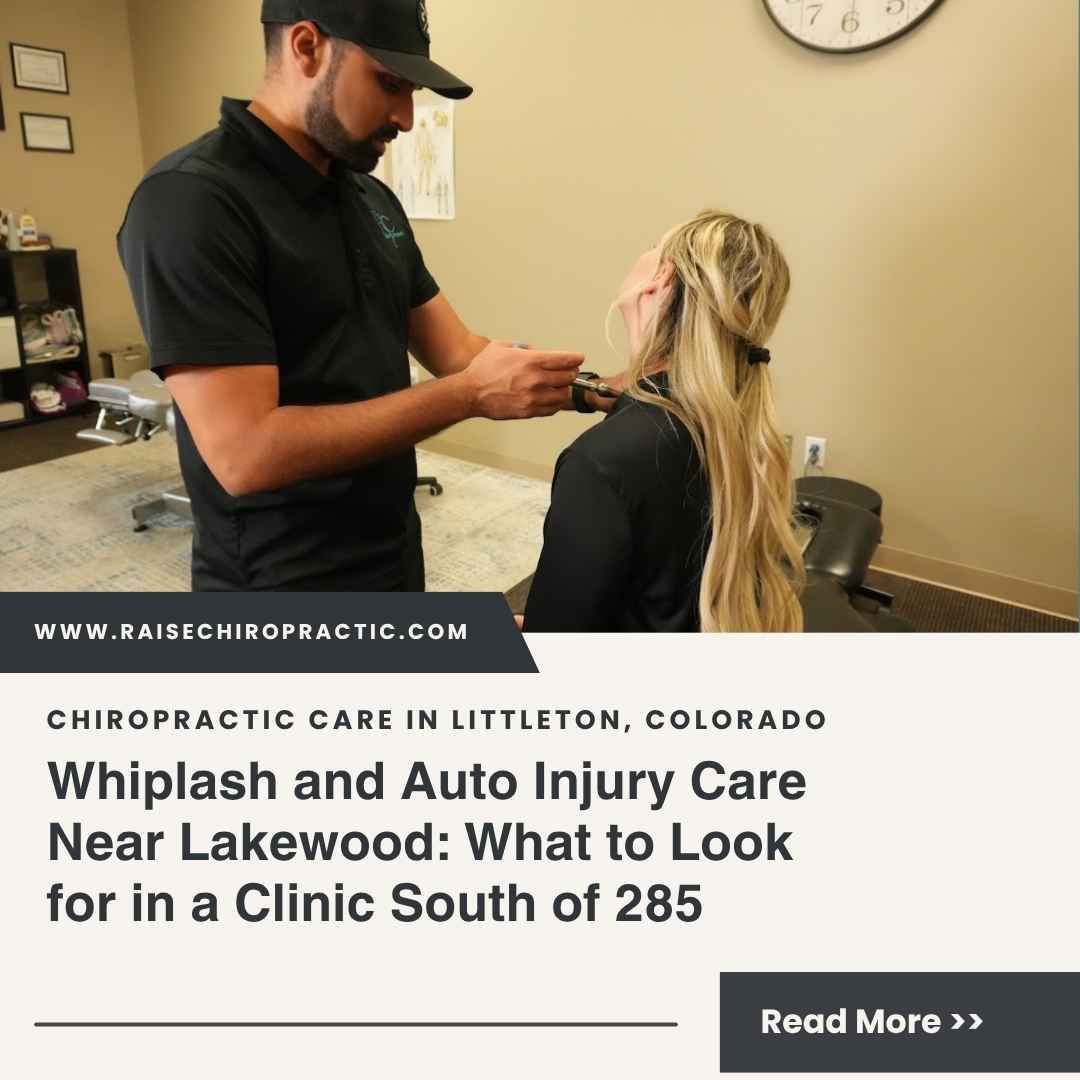
When conservative chiropractic care is appropriate, your personalized plan may include chiropractic treatment, soft tissue work, and movement based recommendations designed to help reduce pain and improve movement.
Our appointments typically allow 30 to 45 minutes because the details matter after a crash. You should leave understanding what we found, what may be contributing to your symptoms, and what your next step should be.
There is no pressure and no forced long term contract—just thoughtful care and clear recommendations.
You Still Deserve Care, Even When the Driver Is Gone
A hit and run can leave you feeling angry, unsettled, and unsure what to do next.
Take the steps you can control: get safe, report the crash, get appropriate medical care, notify your insurer, and keep good records.
Then do not ignore your body because the other driver disappeared.
If you are dealing with pain, stiffness, headaches, or movement limitations after a hit and run injury in Colorado,
schedule a personal injury evaluation with Raise Chiropractic for clear answers and a no pressure recovery plan.
Move Better. Live Pain-Free.