Car Accident Chiropractor Near Highlands Ranch: Why Residents Cross C-470 for Injury Care
After a car accident, the last thing you want is another complicated decision.
You are already dealing with a damaged vehicle, calls from insurance, missed work, family logistics, and the unsettling question of whether you are actually okay. Then your neck starts tightening up. Your low back feels off. A headache shows up after a few hours at your desk. Suddenly, you are searching for a car accident chiropractor in Highlands Ranch and wondering who you can trust with something that feels bigger than a regular sore back.
For many Highlands Ranch residents, the right answer is not necessarily the clinic that happens to be closest on a map.
It is the place that will take the time to understand what happened, assess how your body is moving, explain what they are seeing in plain English, and give you a realistic plan—without pressure, fear tactics, or a forced long-term contract.
That is why some people choose to cross C-470 for injury care at Raise Chiropractic in Littleton.
The drive is not about chasing a flashy promise. It is about getting thoughtful, personalized care when your body does not feel like itself after a collision.
After a Crash, “Nearby” Means More Than Distance
Convenience matters after an injury. No question about it.
When your neck hurts, your car is in the shop, and your schedule is already upside down, you do not want to add an hour-long trek across the metro for every appointment. But there is another side to convenience: the care itself needs to fit your life.
A nearby clinic should make you feel like a person, not a case number.
For Highlands Ranch residents, heading across C-470 to Littleton can make sense when it gives you access to a provider who listens carefully, allows time for an actual assessment, and builds recommendations around your symptoms, work demands, family responsibilities, and recovery goals.
The shortest appointment is not always the most convenient one if you leave with more questions than answers.
At Raise Chiropractic, our appointments typically allow 30 to 45 minutes. That gives us room to talk through the crash, assess movement, and explain what may be contributing to your pain. It also means you are not expected to squeeze your entire injury story into a two-minute conversation at the front desk.
Why Car Accident Symptoms Often Feel Worse Later
One of the most frustrating parts of a collision is how deceptive the first few hours can be.
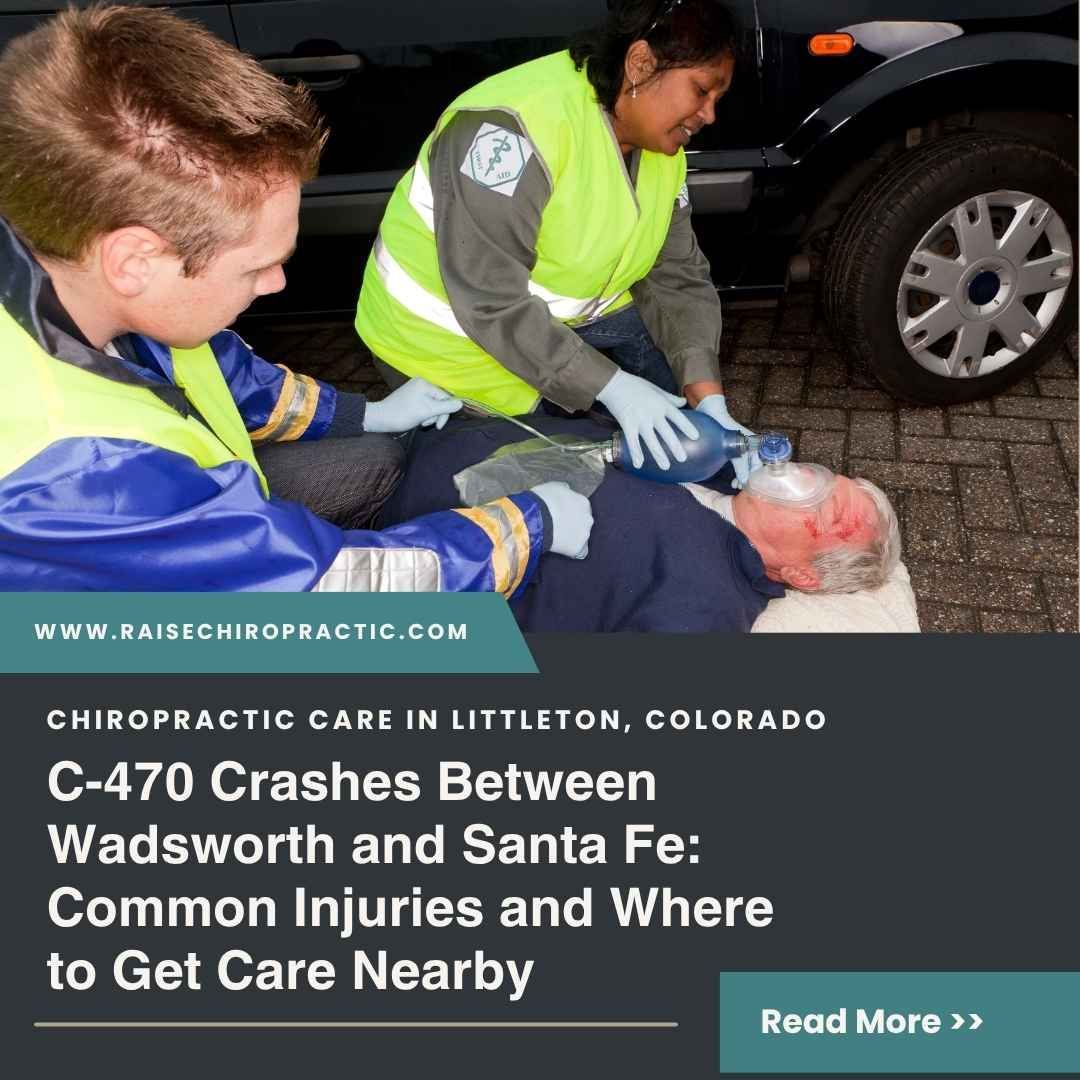
At the scene, you are running on adrenaline. You are checking on passengers, moving your car, calling family, taking photos, exchanging information, and trying to process what just happened. You may genuinely feel okay enough to drive home.
Then the next morning, things change.
Your neck does not want to turn when you back out of the driveway. Your shoulder feels tight when you reach for a cup. You have a headache by lunchtime. Your low back hurts after sitting through a meeting. You realize that “I’m fine” was really just “I have not slowed down long enough to notice what hurts.”
That delayed soreness can happen after a rear-end collision, side-impact crash, sudden stop, or other impact. Your body may brace hard. Your head and neck may move quickly. Your shoulders can tighten. Your jaw may clench. Your back may absorb force through the seat.
None of that automatically means you have a severe injury. But it does mean new or worsening symptoms should not be ignored.
A car accident chiropractor near Highlands Ranch should take the details seriously: the direction of impact, your position in the vehicle, whether you were turning your head, when symptoms started, and what everyday activities now feel harder.
What Post-Accident Care Should Actually Look Like
A useful injury appointment should be more than a quick adjustment followed by “See you next week.”
At Raise Chiropractic, the first step is a conversation.
We want to know:
- How the crash happened
- Whether you were hit from behind, from the side, or stopped suddenly
- What symptoms showed up immediately and what developed later
- Whether you have had imaging, emergency care, urgent care, or other medical evaluation
- What you cannot comfortably do now that you could do before
- How pain is affecting sleep, work, driving, exercise, or caring for your family
Then we look at movement.
Can you turn your neck comfortably? Are you guarding one shoulder? Is your low back changing the way you sit or walk? Are there signs that suggest a referral for imaging, medical evaluation, dental care, or another specialist?
That is what root-cause movement assessment means in real life. It is not about hunting for a fancy label. It is about understanding the pattern behind your symptoms so that recommendations make sense.
When chiropractic care is appropriate, your plan may include chiropractic treatment, soft-tissue work, and movement-based recommendations designed to help reduce pain and improve movement. For some people, other services available at Raise Chiropractic—such as shockwave therapy—may be discussed when clinically appropriate.
The plan should fit your body. Not the clinic’s sales goal.
The Right Care Is Not Always Chiropractic Care Alone
This matters.
Chiropractic care can be a useful part of recovery for some post-crash musculoskeletal symptoms. It is not a substitute for emergency care, imaging, medical evaluation, or specialty care when those are needed.
Seek emergency medical care immediately for symptoms such as loss of consciousness, worsening headache, repeated vomiting, confusion, seizures, severe neck or back pain, chest pain, trouble breathing, new weakness or numbness, or difficulty speaking.
You should also seek prompt medical guidance if you have significant pain after a high-impact crash, an obvious deformity, major swelling, or symptoms that rapidly worsen.
At Raise Chiropractic, we do not try to “push through” red flags. If your symptoms point to a need for another provider, we will help guide you toward the right next step.
That is a key part of good injury care: knowing what fits within conservative chiropractic care and knowing when it does not.
Why the No-Pressure Approach Matters After a Crash
After an accident, people are vulnerable to a lot of noise.
Insurance calls. Internet advice. Friends telling you what they would do. Clinics promising fast fixes. Providers giving you a treatment schedule before anyone has fully explained what they found.
It can feel like everyone has an agenda.
At Raise Chiropractic, we believe you deserve real conversations and personalized recommendations. We do not use fear to sell care. We do not tell everyone they need the same plan. And we do not force long-term contracts on people who came in looking for clear answers.
Some patients need a focused period of care and movement support. Others may need referral or co-management with another provider. Some will need to modify activities temporarily. The right answer depends on the person, the crash, the symptoms, and how recovery is progressing.
That is why a longer appointment can matter. It gives you space to ask questions like:
- Why does my neck hurt when the collision was from the side?
- Why did my headache start two days later?
- Is it normal that my shoulder hurts more than my back?
- Should I keep working out?
- What should I do if driving is uncomfortable?
- When do I need more medical evaluation?
You should not have to guess your way through recovery.
Documentation Is Part of Taking Yourself Seriously
If you are dealing with an insurance claim after a Highlands Ranch collision, accurate documentation can be important.
That does not mean exaggerating your symptoms. It means being clear and consistent.
Write down how the crash happened. Note when symptoms started. Keep records of appointments, recommendations, and work restrictions. Pay attention to what you can and cannot do comfortably.
Those details help create a more accurate picture of your recovery. They also help your providers make better decisions, because they can see how symptoms are changing over time.
If pain is worsening, spreading, or affecting sleep, work, driving, or basic movement, say so. You are not being difficult. You are giving your care team information they need.
Crossing C-470 Should Feel Worth It
For many Highlands Ranch residents, care in Littleton is close enough to be practical and thorough enough to feel worthwhile.
The goal is not to add another burden to your week. It is to give you a place where you can slow down, explain what happened, and get a plan built around your actual life.
If you are searching for a car accident chiropractor in Highlands Ranch and want care that goes beyond a rushed adjustment, Raise Chiropractic is here to help.
Schedule a personal injury evaluation with Raise Chiropractic and get clear, no-pressure guidance for moving forward after your accident.
Move Better. Live Pain-Free.