C-470 Crashes Between Wadsworth and Santa Fe: Common Injuries and Where to Get Care Nearby
The stretch of C-470 between Wadsworth and Santa Fe is familiar to a lot of Littleton drivers.
It is how you get to work, head toward the mountains, make it to a school event, or get home to Chatfield Bluffs after a long day. Most of the time, it is just part of the routine.
Until it is not.
A merge tightens up. Traffic stops faster than expected. Someone changes lanes late. A driver is looking at navigation instead of the brake lights ahead. Suddenly, the ordinary drive becomes a collision—and then comes the question nobody wants to ask:
“Why do I feel worse today than I did at the scene?”
At Raise Chiropractic, we hear that often after C-470 crashes. People may walk away from a rear-end collision, sideswipe, or sudden stop thinking they are lucky to have only minor vehicle damage. Then the neck stiffness, headaches, shoulder tension, low-back pain, or jaw discomfort starts showing up over the next day or two.
The point is not to assume every crash causes a major injury. It is to take new symptoms seriously, get the right level of care, and avoid brushing off a problem just because your car is still drivable.
Why This Stretch of C-470 Can Create Sudden-Stop Collisions
This part of C-470 carries the kind of traffic that keeps drivers on their toes: commuters, families, delivery vehicles, people heading to or from I-25, and drivers moving between Littleton, Highlands Ranch, Ken Caryl, and the Southwest Denver area.
It is also a corridor where traffic can change quickly.
One minute, lanes are moving. The next, vehicles are braking for congestion, an interchange, weather, construction, or a merge. Add darkness, sun glare, snow, rain, weekend travel, or a driver trying to make a last-second lane change, and the margin for error gets smaller.
That does not mean every collision on C-470 looks the same. But the types of forces involved can explain why people feel pain in different places afterward.
A rear-end crash may leave someone with neck stiffness and headaches. A side-impact or sideswipe may affect the shoulder, ribs, hip, or low back. A sudden stop can make the body brace hard against the seat belt and steering wheel, even when there is no direct impact from another vehicle.
Your injury pattern depends on many factors: your position in the car, the direction of impact, whether you were turning your head, whether you saw it coming, and how your body reacted in that split second.
That is why a useful evaluation should start with the full story—not just, “Where does it hurt?”
The Most Common Symptoms After a C-470 Crash
There is no single “C-470 injury.” But there are common symptoms people report after a motor-vehicle collision.
Neck Pain, Stiffness, and Reduced Movement
Neck pain is one of the most common complaints after a sudden collision, especially when the body experiences a rapid back-and-forth or side-to-side movement.
You may notice that turning to check blind spots hurts. Looking down at your phone or laptop may feel worse than usual. You may wake up the next morning with a stiff neck, tight shoulders, or a headache that was not there before.
Many people call this whiplash. That term is commonly used for a range of neck symptoms that can follow a rapid acceleration-deceleration force. The symptoms can vary widely, which is why an individual assessment matters.
Upper-Back and Shoulder Tension
Your shoulders often take on a lot after a crash.
You may grip the steering wheel tightly, brace against the seat, or tense up before impact. Afterward, muscles around the upper back and shoulder blades can feel tight, sore, or restricted. Some people describe it as a knot that will not let go. Others notice pain while reaching overhead, carrying groceries, or putting on a jacket.
Low-Back Pain
A sudden stop can send force through the pelvis and low back. Sitting in the car afterward, then trying to get out, may make the discomfort more noticeable.
Low-back pain after a crash can feel like stiffness, aching, sharp pain with certain movements, or a feeling that the back simply does not want to cooperate. It may be worse after sitting through work, driving, or trying to return to exercise too quickly.
Headaches, Jaw Pain, and Feeling “Off”
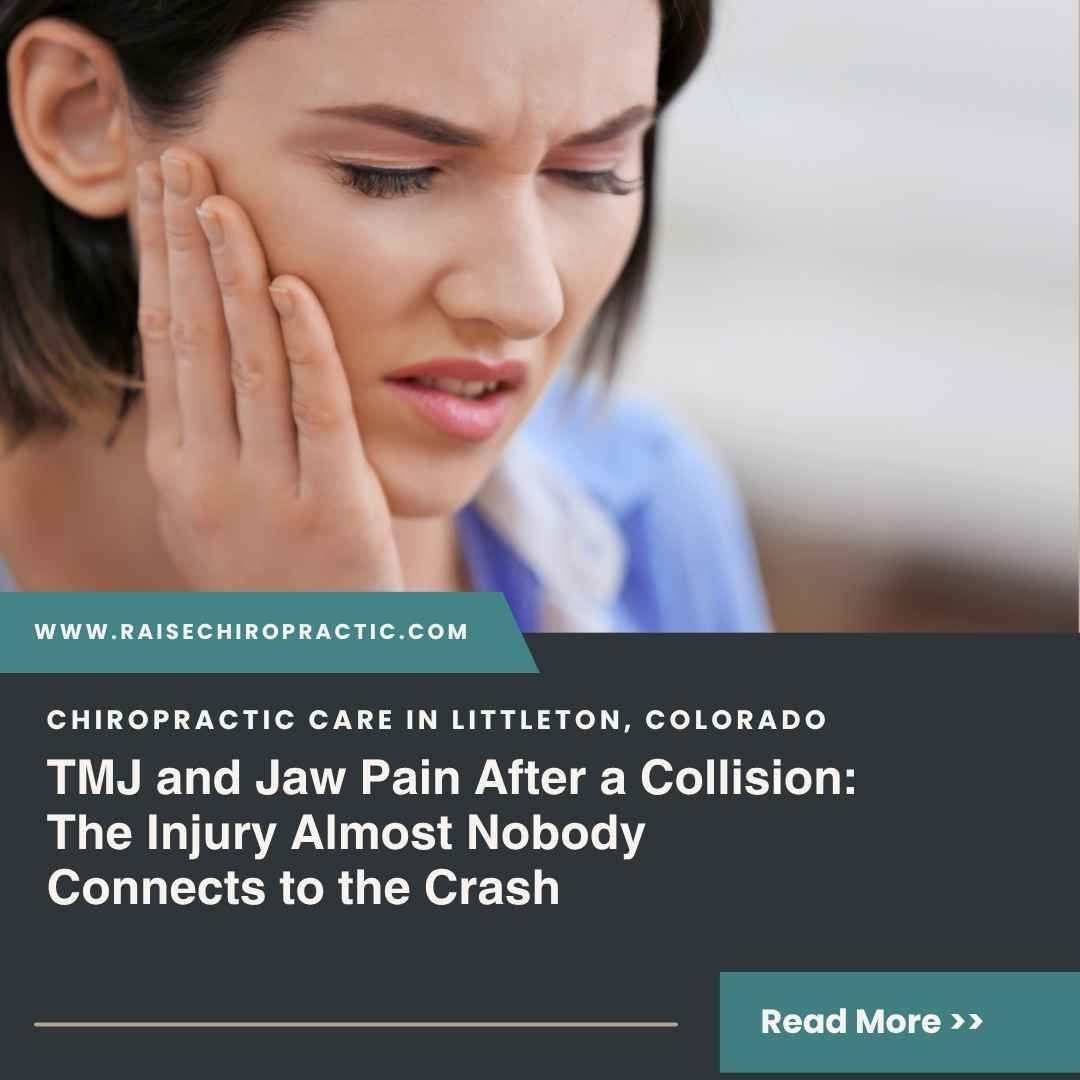
Headaches can develop after a collision for several reasons, including neck tension, jaw clenching, or a head injury that needs medical attention.
Some people also notice jaw pain, clicking, facial tightness, or trouble getting comfortable at night. Others feel foggy, dizzy, nauseated, more sensitive to light or noise, or unusually fatigued.
Those symptoms should not be self-diagnosed. If you hit your head, lost consciousness, or notice concerning neurological symptoms, seek prompt medical evaluation.
Arm, Leg, Rib, or Hip Discomfort
A crash can also leave people with pain that travels into an arm or leg, rib soreness from the seat belt, hip pain from bracing, or wrist and hand pain from gripping the steering wheel.
Tingling, numbness, weakness, or worsening radiating pain should always be evaluated promptly. Those symptoms can indicate that something more than ordinary muscle soreness may be going on.
Why You Might Not Feel the Full Impact Right Away
Immediately after a crash, your body is focused on the moment.
You are checking whether everyone is okay. You are dealing with traffic, exchanging information, calling family, arranging a ride, or trying to get to work. Adrenaline can make you feel more capable than you actually are.
Then the next day arrives.
You wake up and realize you cannot turn your head comfortably. Your shoulder aches when you reach for the coffee mug. Your low back hurts when you get dressed. A headache starts after a few hours at your desk.
That delayed soreness is one reason people wait too long to get answers. They tell themselves it is probably nothing because they were able to drive home.
Maybe it is minor. But if pain is new, persistent, worsening, or changing how you move through daily life, it deserves a closer look.
You do not need to wait until the problem becomes unbearable to ask for help.
Where to Get Care After a Crash Near Chatfield Bluffs
The right place to get care depends on your symptoms.
If there is severe pain, chest pain, trouble breathing, loss of consciousness, confusion, repeated vomiting, worsening headache, new weakness or numbness, seizures, significant bleeding, or concern for a fracture, seek emergency care right away.
If symptoms are concerning but not emergent—such as persistent neck or back pain, reduced movement, headaches, shoulder pain, or pain that is worsening over the first few days—contact an appropriate medical provider for guidance and evaluation.
A C-470 car accident chiropractor near Chatfield Bluffs can be a helpful part of recovery once urgent concerns have been ruled out and chiropractic care is appropriate. The goal is not to replace emergency, medical, dental, imaging, or specialist care when those are needed. The goal is to make sure you do not get lost in the gap between “the crash happened” and “I still do not feel right.”
For Littleton and Chatfield Bluffs residents, choosing care nearby can also make it easier to follow through. When you are sore, busy, and already dealing with vehicle repairs or insurance calls, driving across the metro for every appointment is not always realistic.
What to Do in the Days After the Crash
The first few days can feel messy. A simple plan helps.
Write down what happened while the details are still fresh. Note the direction of impact, whether you were stopped or moving, where you were sitting, and whether you were looking in another direction.
Pay attention to symptoms as they develop. What hurts? When did it start? Is it improving, worsening, or staying the same? What activities now feel limited?
Keep records of appointments, recommendations, and symptoms. If an insurance claim is involved, accurate documentation helps create a clear picture of your recovery. That is not about exaggerating anything. It is about being honest and consistent.
And do not force your normal routine just to prove you are okay. If a workout, long drive, heavy lift, or full day of housework clearly makes symptoms worse, that is useful information for your provider.
How Raise Chiropractic Helps After a C-470 Collision
At Raise Chiropractic, we begin with a real conversation—not a rushed adjustment.
We want to understand the crash, your symptoms, your work demands, and what daily movements now feel difficult. We look at how your neck, back, shoulders, and hips are moving, then create recommendations based on what your body actually needs.
When chiropractic care is appropriate, your personalized plan may include chiropractic treatment, soft-tissue work, and movement-based recommendations designed to help reduce pain and improve movement. We may also recommend medical evaluation, imaging, or referral to another provider when your symptoms point in that direction.
Our appointments typically allow 30 to 45 minutes because post-crash care should not feel like a conveyor belt. You should leave understanding what we found, what may be contributing to your symptoms, and what to do next.
There is no pressure and no forced long-term contract—just a practical plan built around recovery.
Do Not Let “It Wasn’t That Bad” Become Your Whole Plan
A crash on C-470 can disrupt more than your commute. It can make work harder, sleep worse, driving uncomfortable, and basic tasks frustrating.
You do not have to decide at the scene whether your pain is valid. You only need to notice what is different and get the right support when something is not improving.
If you are dealing with neck, back, shoulder, or headache symptoms after a C-470 crash near Littleton or Chatfield Bluffs, schedule a personal injury evaluation with Raise Chiropractic for clear answers and a no-pressure recovery plan.
Move Better. Live Pain-Free.